
Before we begin, an important note: this article is for educational and informational purposes only. It is not medical advice, and it is not a recommendation to take L-theanine or any supplement. Before taking any supplement, speak to your doctor, GP, pharmacist or a qualified medical practitioner, especially if you take medication, have a medical condition, are pregnant or breastfeeding, or are dealing with anxiety, sleep problems or blood pressure concerns.
There is a moment many high performers know well. You are about to step into something that matters: a match, a meeting, a presentation, a podcast recording, an exam or a difficult conversation. You have prepared, but your nervous system has other ideas. Your heart rate rises, your thoughts scatter, and the energy that should help you perform starts to feel like it is working against you.
That is where L-theanine has gained attention. Often found in tea and sold as a supplement, it is promoted for calm focus, anxiety support, caffeine jitters and sleep. But is it genuinely useful, or is it just another wellness trend with good marketing?
The better question is not simply “Does L-theanine work?” The better question is, where might it fit inside a responsible performance system?
What is L-theanine?
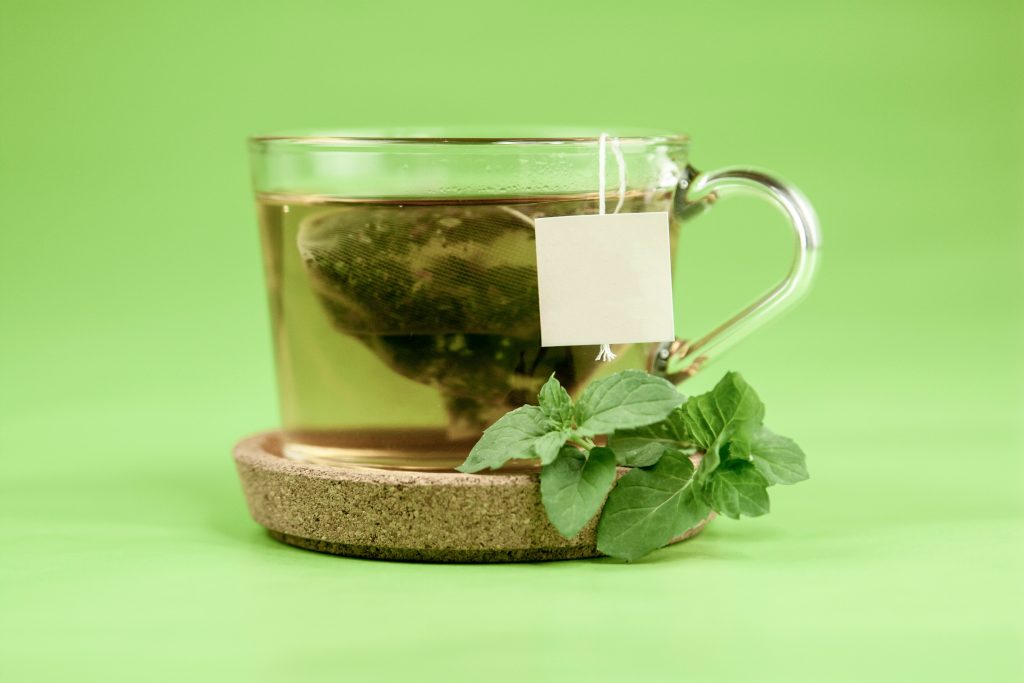
L-theanine is an amino acid found mainly in tea leaves, including green tea, black tea and matcha. It is one reason tea can feel different from coffee. Coffee often feels more directly stimulating, while tea can feel smoother for some people because it naturally combines caffeine with L-theanine.
Supplement doses are usually much higher than the amount you would get from a normal cup of tea. That does not automatically make L-theanine unsafe, but it does mean it should be treated thoughtfully. “Natural” does not always mean appropriate for every person, every dose or every situation.
The most common claims around L-theanine are that it may:
- Support relaxation without sedation
- Help with stress or mild anxiety
- Improve focus, especially when combined with caffeine
- Support sleep quality in people with a busy mind
Those claims are interesting because anxiety, focus and sleep all affect performance. But they also need context.
Why calm focus matters for performance
In performance coaching, the goal is not to eliminate nerves. Nerves are not always the enemy. Before a big moment, some activation can be useful. It can sharpen attention, increase energy and signal that the moment matters.
The problem starts when activation becomes dysregulation. That is when you feel scattered, tense, rushed or mentally overloaded. You may still know what to do, but you struggle to access your preparation.
This is where L-theanine becomes interesting. It is often described as supporting “relaxed alertness” or “calm focus”. In simple terms, it may help some people feel slightly more settled without feeling sedated.
The keyword is “some”. Responses vary. Some people notice a clear calming effect, some notice a subtle shift, and others notice very little.
L-theanine for anxiety and stress
L-theanine is often discussed as an anxiolytic, meaning something that may help reduce anxiety. Some studies suggest it may modestly reduce subjective stress or soften the body’s response to stressful situations.
That does not mean it is a treatment for anxiety disorders. It does not replace therapy, medical care, prescribed medication or mental health support. It also does not solve the deeper causes of pressure, burnout, overtraining or poor recovery.
For a fundamentally healthy person dealing with situational stress, L-theanine may be a small tool. For example, someone who feels overactivated before a presentation or competition may find it helps take the edge off. But even then, it should sit alongside better preparation, breathing tools, self-talk, routines and recovery.
In other words, L-theanine may nudge the system. It should not become the system.
L-theanine and caffeine: a useful combination?
One of the most practical areas of interest is the combination of L-theanine and caffeine.
Caffeine can improve alertness, but it can also create jitters, irritability, racing thoughts and a slightly anxious edge. If coffee makes you productive for 20 minutes and scattered for two hours, the issue may not be motivation. It may be stimulation without regulation.
L-theanine may help smooth the edges of caffeine for some people. That is one reason tea can feel different from coffee. The caffeine provides alertness, while L-theanine may support a calmer, steadier focus.
But this only works if the rest of your focus system is in place. If your phone is next to you, notifications are on, your task is vague and you are trying to multitask, L-theanine will not fix the problem.
For better focus, start with the basics:
- Define the task before you begin
- Remove obvious distractions
- Put your phone out of sight
- Use a timed work block
- Manage caffeine dose and timing
- Take proper breaks
Supplements may support focus, but habits create the conditions for it.
Can L-theanine help with sleep?
L-theanine is also marketed for sleep, but this claim needs careful handling.
It is not a sleeping pill, and it should not be treated as a stand-alone solution for insomnia. If someone has chronic sleep problems, severe daytime fatigue, breathing issues at night, persistent anxiety or significant mental health symptoms, they need a proper medical assessment.
Where L-theanine may be more relevant is the “busy-brain” scenario. This is when you are physically tired but mentally switched on. You get into bed, but your mind starts rehearsing conversations, replaying mistakes and planning tomorrow.
In that case, the goal is not to knock yourself out. The goal is to reduce pre-sleep arousal.
Before considering supplements, focus on:
- Morning daylight exposure
- Consistent wake times
- Earlier caffeine cut-off
- Dimmer lights in the evening
- Reduced screen stimulation
- A short written brain dump before bed
- A repeatable wind-down routine
If L-theanine is used, it should be one small part of a wider sleep strategy, not a substitute for one.
How to think about L-theanine responsibly
If you are curious about L-theanine, the most responsible approach is to treat it as an experiment, not a solution.
First, speak with a doctor, GP, pharmacist or qualified medical practitioner. This matters if you take medication, have blood pressure concerns, have a medical condition, are pregnant or breastfeeding, or are dealing with anxiety or sleep problems.
Second, clarify what you are trying to improve. Are you targeting pre-event nerves, caffeine jitters, deep work focus or busy-brain sleep? If you do not define the problem, you cannot judge whether anything helped.
Third, track a baseline. For three to five days, record simple scores for focus, anxiety, sleep quality, energy, caffeine use and stress. You do not need anything complicated. A 1 to 10 score is enough.
Fourth, test changes in low-stakes conditions. Never try a new supplement for the first time before an important match, race, presentation, exam, interview or recording.
Finally, assess honestly. Did you feel calmer? Did you focus better? Did you feel sleepy? Did you notice side effects? Was the improvement meaningful, or did you simply like the idea that you had taken something?
That kind of self-awareness is part of the real winning edge.
When L-theanine is not the answer
L-theanine is not the right tool if it is being used to avoid a deeper issue.
It should not be used to ignore burnout, chronic stress, poor sleep, excessive caffeine intake, overtraining, emotional overload or unhealthy work patterns. It should not be used to self-treat serious anxiety, depression, insomnia or panic symptoms. It should never be used as a reason to change prescribed medication without medical supervision.
For coaches, this boundary matters. A coach can educate, ask good questions and encourage better routines. But supplement decisions belong with qualified medical practitioners.
A useful coaching response might be:
“L-theanine may help some people feel slightly calmer or more focused, but it is not a treatment, and it is not a replacement for the basics. Speak with your GP or pharmacist first. In the meantime, let’s look at your sleep, caffeine, routine, preparation and stress management.”
That keeps the conversation responsible and practical.
The real lesson: tools do not replace systems
The most important message is this:
L-theanine may be useful for some people in some situations, but it is not magic.
It may help take the edge off. It may support calmer focus. It may smooth caffeine jitters. It may help some people who struggle with a busy mind at night. But the effects are likely to be modest, and the foundations still matter more.
The real winning edge does not come from chasing every supplement that appears in your feed. It comes from understanding your nervous system, building better routines and knowing which tools genuinely support your performance.
Supplements can nudge.
Systems and habits do the heavy lifting.
Listen to the full episode
If you want the deeper breakdown, listen to the full episode of The Winning Edge Coach:
L-Theanine for Performance Anxiety: Can It Help You Stay Calm and Focused?
In the episode, we explore L-theanine for anxiety, focus, caffeine jitters, sleep and performance pressure. You will also hear a practical framework for testing tools responsibly and for understanding when a supplement is useful, unnecessary, or a distraction from the real work.
Listen here:
And before you go, one final reminder: this article and episode are for educational purposes only. Before taking L-theanine or any supplement, consult your doctor, GP, pharmacist or another qualified medical practitioner.